Tinley Park Historical Society Landmark Chapter & Museums is a historic jewel nestled within the side streets of this popular growing community. Built in 1884, the quaint chapel glows in the beautiful stained glass throughout, a pressed tin ceiling, and an organ to fill the air with music.

The Tinley Park community had its roots in the pioneer settlement of Batchelor’s Grove in the early 1830s. The Rock Island and Pacific railroad began construction through the area in 1851, partially following the path of the Illini Trail. In October 1852 the inaugural train, “The Rocket,” carried dignitaries from Chicago to Joliet and back. In June 1853, Dr. Samuel Rush Haven platted the Village of Bremen on the path of the railroad adjacent to Batchelor Grove Road (now Oak Park Avenue) and straddling the Thornton Road (now 175th Street).
By 1854, the fledgling Village of Bremen was beginning to take shape. Samuel Tinley, Sr. was hired as station agent for the railroad. James Kiddle, a carpenter, is believed to have constructed the first general store for Dr. Moses Russell Ballard on North Street just east of Batchelor Grove Road. Dr. Ballard also assumed the role as Postmaster of the New Bremen Post Office and relocated the Post Office to his general store. The community quickly became commonly known as New Bremen after the Post Office. Soon, other businesses followed to serve the needs of the area farmers. The Rock Island railroad made the village a center for commerce, with farmers sending grain, milk and meat to Chicago and the eastern markets. By 1861, the Village of Bremen business community includes Von Berge & Finsler and Carl F. Vogt, merchants; H. Reibling, hotel proprietor; James Kiddle, Carl Deist, and John Hartung, carpenters; M. Schneider, wagon maker; Carl Deist and Carl F. Vogt, saloonkeepers; H.W. Schmitt, blacksmith; J. Sippel, shoemaker. A Holland-style windmill was constructed in the early 1870s to grind grains into flour and remained a local landmark long after it ceased to be used.
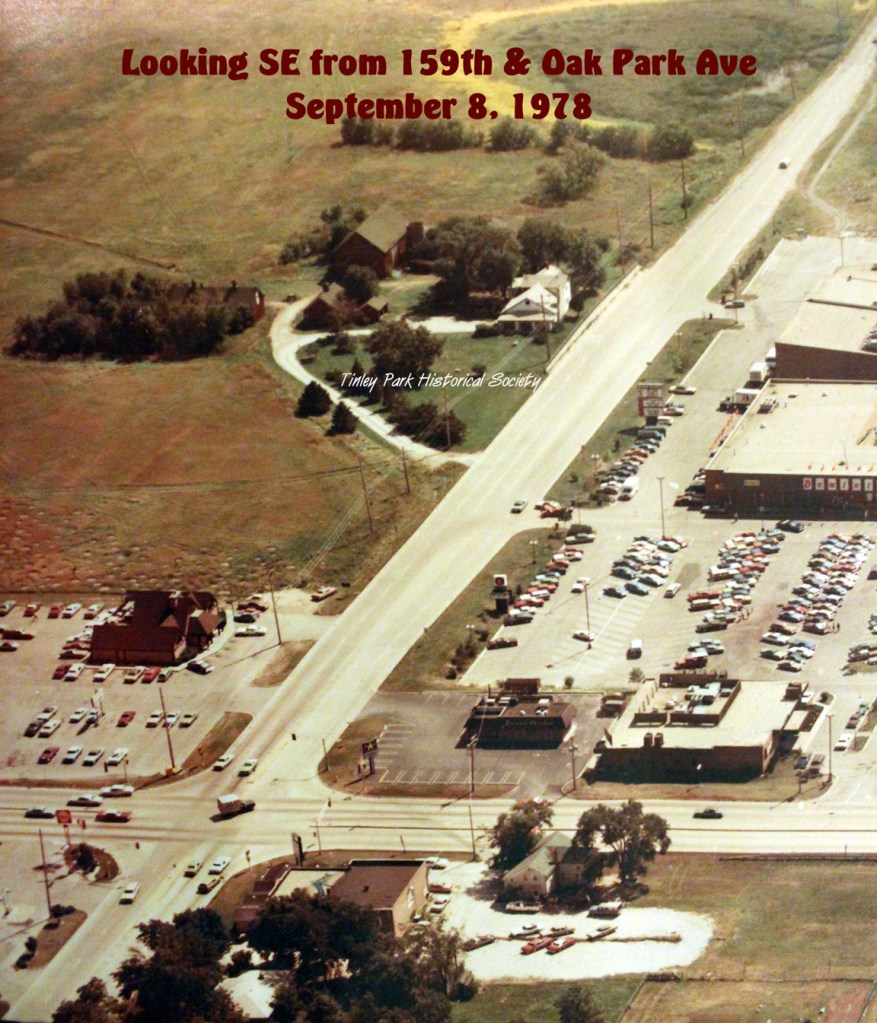
The 20th century brought major commercial developments including the Diamond Spiral Manufacturing Company (washing machines), an Ironite factory (an additive used to strengthen concrete used in the construction of the Hoover Dam), and a short-lived airplane factory. By the 1930s housing developments began expanding the community with Vogt’s and Elmore’s subdivisions. Renewed housing expansion followed the Second World War, beginning with the Parkside subdivision. By the 1970s, residential growth had expanded the village boundaries far to the west. Our village continues to grow, and was even recognized by Business Week magazine as the “Best Place in America to Raise Your Kids.”
We invite you to tour our facilities and experience our rich history! The Tinley Park Historical Society maintains two museums on our campus, the chapel museum and adjacent schoolhouse museum. Exhibits on display include relics from early businesses, farms, schools, churches, and everyday life; our library includes family histories and reference materials pertaining to Tinley Park and surrounding areas. To learn more about the Tinley Park Historical Society, please visit our Contact page for opening hours and contact information.
 Tinley Park Historical Society